Interesting Facts About Jesmond
From a name that may mean the mouth of the Ouseburn to a medieval pilgrimage shrine, Lord Armstrong's private valley and a station that became a pub, here are the stories that make Jesmond so distinctive.
Jesmond is one of Newcastle's best-known suburbs, famous today for its leafy streets, its student population and its busy cafes and bars. Yet beneath the Victorian terraces lies a much older and stranger story: a medieval pilgrimage shrine, a valley remade by one of the Victorian age's greatest engineers, and a railway station that ended its days as a public house. For a place many people pass through on the Metro, Jesmond packs in a remarkable amount of history. Here is a roundup of the facts that make it worth knowing.
The name may mean the mouth of the Ouseburn
The most widely repeated explanation of the name Jesmond is that it derives from "Ouse-mouth" or the mouth of the Ouseburn, the small river that carved out the valley now known as Jesmond Dene. An alternative and more romantic tradition reads the name as "Jesus mound", linking it to the medieval shrine that once drew pilgrims here. Whichever you prefer, the place-name is genuinely ancient: the chapel at its heart is first recorded in 1272.
Best for: a talking point: a suburb whose name may record a lost river mouth or a medieval holy site.
It was a major medieval place of pilgrimage
Long before the terraces arrived, Jesmond was a destination for pilgrims. According to tradition, an apparition of the Virgin Mary in the valley led to the building of St Mary's Chapel, and by the later Middle Ages the shrine had become one of the most important in the north of England. Pilgrims travelled to it along what is still called Pilgrim Street in the city centre, and in 1479 a Yorkshire rector left money to the four greatest shrines in the kingdom, naming St Mary's Chapel alongside Canterbury and St Paul's. The chapel was suppressed at the Reformation and fell into ruin, and its ivy-clad remains still stand in Jesmond Dene.
Lord Armstrong turned the valley into a private garden
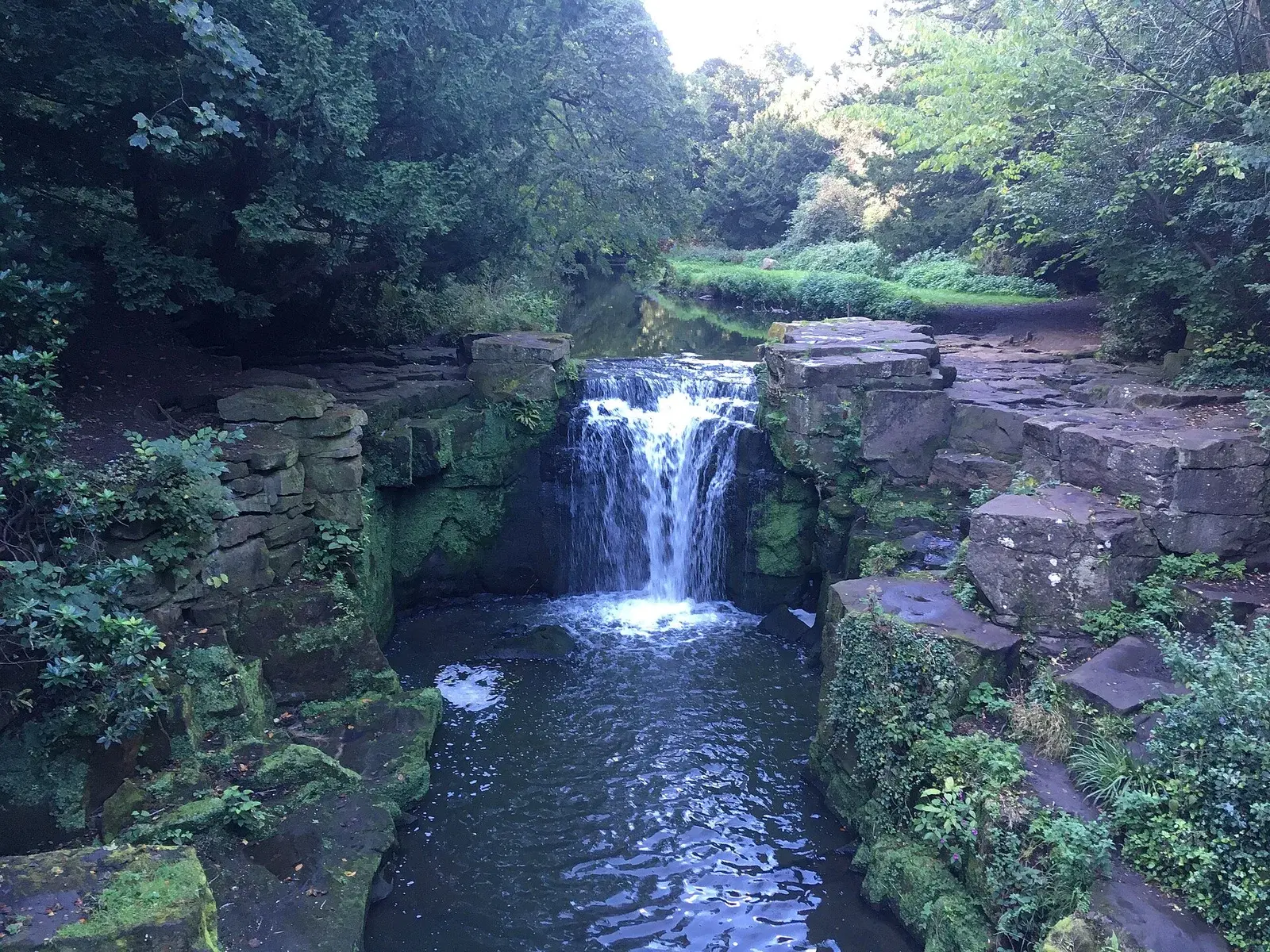
The wooded ravine of Jesmond Dene owes its present appearance to Sir William Armstrong, the Tyneside engineer and armaments magnate. He built a house here in 1835 and, as his fortune grew, gradually bought up the valley, planting thousands of trees and shrubs and adding cascades, a waterfall and walks. In 1864 he had a banqueting hall built, designed by the architect John Dobson, to entertain his business clients. What is now a much-loved public park began life as one man's private pleasure ground.
Best for: a proper wander: a steep wooded valley that was once a Victorian industrialist's back garden.
The Dene was a gift to the city, opened by royalty
Armstrong did not keep the valley to himself. He gave Jesmond Dene to the people of Newcastle in 1883, and it was formally opened to the public in August 1884 by the Prince and Princess of Wales, the future King Edward VII and Queen Alexandra. The Friends of Jesmond Dene still help care for it today. Armstrong Bridge, his elegant iron span across the valley, was completed in 1878 and is now reserved for walkers and the weekend market.
Jesmond's old railway station is now a pub
Jesmond had its own mainline station long before the Metro arrived. It opened in June 1864 on the Blyth and Tyne Railway and closed in January 1978 when the line was converted for the Tyne and Wear Metro, which runs beneath the town at the modern Jesmond station. The handsome old station building survived and is Grade II listed, and since 1981 it has been a pub, The Carriage, complete with a 1912 railway saloon carriage in the beer garden.
Best for: a pint with history: a Victorian station that pours pints instead of running trains.
A shipbuilder's mansion became a convent school
At the northern edge of Jesmond stands Jesmond Towers, a Gothic mansion enlarged in the 1860s and 1880s for the shipbuilding entrepreneur Charles Mitchell, a business partner of Armstrong. In 1912 it was taken over by the Filles de la Sagesse, a French religious order, and became the home of La Sagesse School until it closed in 2008. The sisters even built a grotto in the grounds modelled on the shrine at Lourdes, a quiet echo of Jesmond's much older role as a place of pilgrimage.
Famous names and a fine place to live
Jesmond has been home to some notable residents over the years, from Lord Armstrong himself to the musician Bryan Ferry, and the philosopher Ludwig Wittgenstein lodged in the area during his time at Newcastle. The suburb's Victorian character is now protected by three conservation areas covering Brandling Village, South Jesmond and Jesmond Dene, and the grand Jesmond Dene House, a former Arts and Crafts mansion, is today a country-house hotel. Add the parks, the independent shops and the Metro on the doorstep, and it is easy to see why Jesmond remains one of the most sought-after corners of Newcastle.
Frequently asked questions
What does the name Jesmond mean? The most common explanation is that Jesmond derives from "Ouse-mouth", the mouth of the Ouseburn, the river that formed Jesmond Dene. An older tradition reads it as "Jesus mound", linking the name to the medieval shrine of St Mary's Chapel that once drew pilgrims to the valley.
Who created Jesmond Dene? The valley was transformed by Sir William Armstrong, the Tyneside engineer and industrialist, who bought up the land from the 1830s onwards, planted it and added features such as a waterfall and a banqueting hall. He gave it to the people of Newcastle in 1883, and it was opened to the public in 1884 by the Prince and Princess of Wales.
Is Jesmond's old railway station still there? Yes. The original Jesmond station, opened in 1864 on the Blyth and Tyne Railway, closed in 1978 when the line became part of the Metro. The Grade II listed building survives as The Carriage pub, which even has a 1912 railway saloon carriage in its garden.
Have a suggestion? Get in touch.
Never miss what’s on
Join the weekly Jesmond.live digest — the best events, news and local tips, straight to your inbox. Free, one email a week.
What's On
Relaxed Early Opening at the Great North Museum: Hancock
9:00 AM - 10:00 AM · Great North Museum: Hancock, Barras Bridge, Newcastle upon Tyne, NE2 4PT
LEGO Build the Change: Drop-in Mass Build
10:30 AM - 3:00 PM · Great North Museum: Hancock, Barras Bridge, Newcastle upon Tyne, NE2 4PT
Art Armada Youth Art Workshop for GCSE and A Level Students
12:00 PM - 3:30 PM · Sid Chaplin Room, Jesmond Library, St George's Terrace, Newcastle upon Tyne, NE2 2DL