The History of Jesmond's Shopping Streets
How Jesmond grew from a village of 2,000 people into a busy Victorian suburb, and the story of its three shopping streets: Acorn Road, St George's Terrace and Osborne Road.
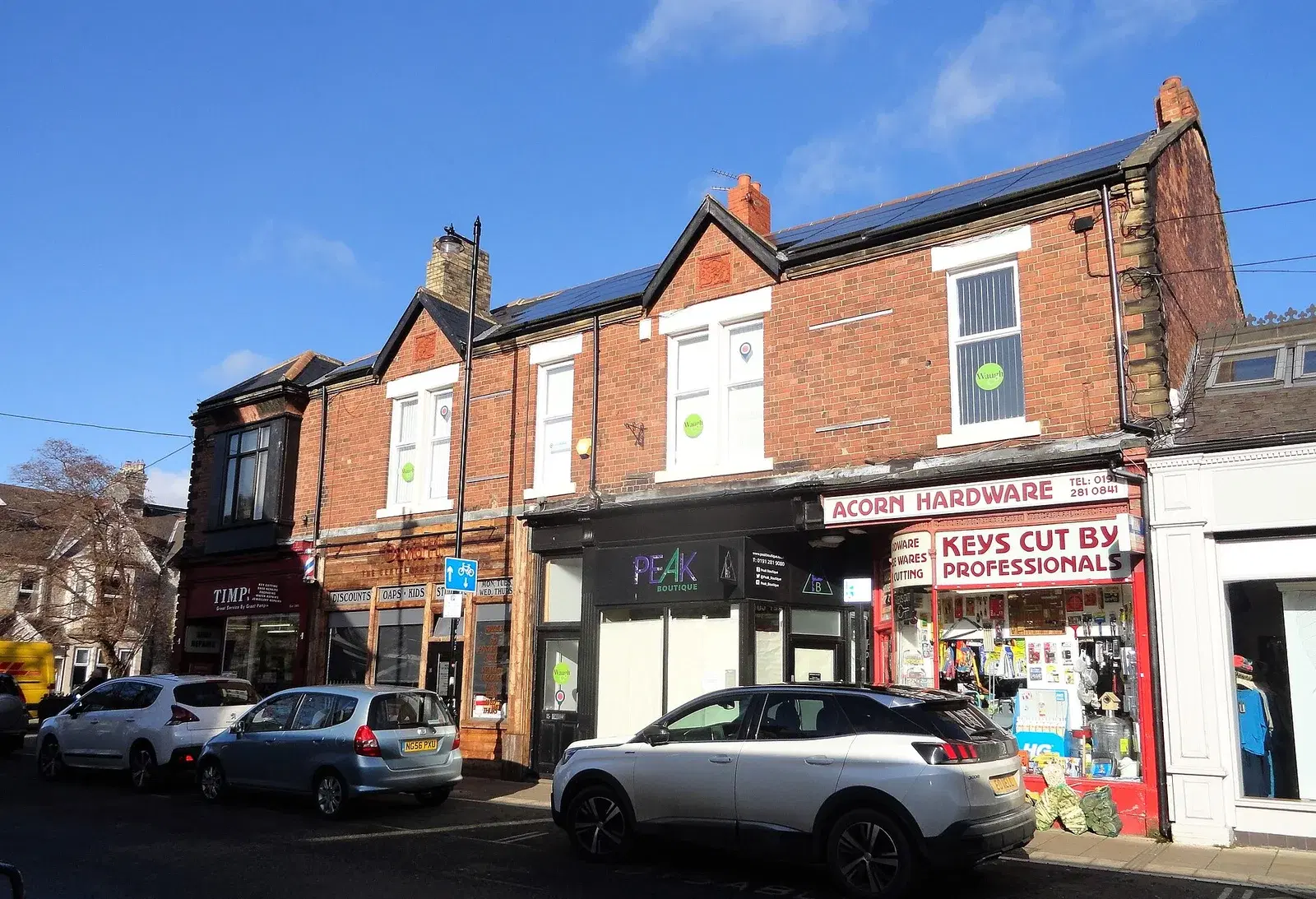
Jesmond has no single high street. Instead its shops cluster along three distinct streets, each with its own character: Acorn Road, the village heart of West Jesmond; St George's Terrace, a neat parade of Edwardian shops; and Osborne Road, the long spine of bars and restaurants that runs down towards the city. All three were laid out during the great expansion that turned a small settlement into one of Newcastle's largest suburbs. This is the story of how they came to be.
From village to suburb
In 1850 Jesmond was still a modest place of around 2,000 people, ringed by fields and country houses. Everything changed with the coming of the railway. A north-south line opened through the area in 1864, with stations that survive today as Jesmond and West Jesmond, and it opened the fields to the builders. House building accelerated through the 1870s and 1880s, the population reached about 15,000 by 1900, and by 1910 the northern half of Jesmond was almost fully built up with the red-brick and stone terraces that still define it. The shops arrived to serve the new residents.
Acorn Road, the village heart
Acorn Road is the closest thing Jesmond has to a village centre, a short street packed with independent bakers, butchers, cafes and greengrocers at the heart of West Jesmond. It grew up alongside the surrounding terraces in the late Victorian period as the natural shopping street for the streets around West Jesmond station. Its future was not always secure: in the 1960s the street was threatened with demolition and redevelopment, and it was local campaigners, the Acorn Road Community Organisation, who fought to save it. That effort helped preserve the small-shop character that still makes Acorn Road so popular today.
Best for: independent shopping: butchers, bakers and cafes on a street that residents fought to save.
St George's Terrace and its Edwardian parade
St George's Terrace takes its name from the great church nearby and carries one of Jesmond's most complete parades of period shops. The shops and flats on the west side, between Thornleigh Road and Coniston Avenue, were finished in 1900, and by 1910 they housed a drapers, a creamery, a ladies' outfitter, a bakery, a grocer and a pharmacy, a snapshot of everyday Edwardian shopping. The rest of the road was completed by around 1906 with more shops, terraced houses and two churches. The street is watched over by St George's Church, completed in 1888 with its landmark Italianate campanile, one of the finest Victorian churches in the North East.
On the same street stands Jesmond Pool, the much-loved swimming baths built in 1938 and now run by the community, a reminder that these streets were built not just for shops but for the whole life of a suburb.
Osborne Road, from grand houses to nightlife
Osborne Road is Jesmond's longest and best-known street, and its story is one of steady change. It was laid out from the 1860s, at first reaching north only as far as St George's Church, and was extended over the following decades to link Jesmond Road with Benton Road. It was prized for the size of its houses, and in 1902 an electric tram line was installed along it, with the No. 38 tram carrying residents into the city centre. Over the twentieth century many of its large houses became hotels, and in more recent decades the street has become the centre of Jesmond's café, bar and restaurant scene. A Sainsbury's Local and other convenience shops keep it serving everyday needs alongside the nightlife.
Best for: an evening out: Jesmond's liveliest street, once lined with grand villas and tram tracks.
A suburb still shaped by its streets
What is striking about Jesmond's shopping streets is how little their bones have changed. The Edwardian parade on St George's Terrace, the village feel of Acorn Road and the long sweep of Osborne Road all survive from the building boom of a century and more ago. The trades have moved on, from creameries and drapers to coffee shops and bars, but the streets themselves still frame daily life in Jesmond much as their Victorian and Edwardian builders intended.
Frequently asked questions
What are Jesmond's main shopping streets? Jesmond's shops are spread across three streets rather than one high street. Acorn Road in West Jesmond is known for independent food shops and cafes, St George's Terrace has a parade of Edwardian shops, and Osborne Road is the long street best known for its bars, restaurants and hotels.
Why is Acorn Road so well known? Acorn Road is the village heart of West Jesmond, lined with independent butchers, bakers, greengrocers and cafes. It was threatened with demolition in the 1960s but saved by local campaigners, which helped preserve its small-shop character and made it one of Jesmond's most popular streets.
When were Jesmond's shopping streets built? Most of Jesmond was built up between the 1860s and 1910 after the railway arrived in 1864. Osborne Road was laid out from the 1860s, the shops on St George's Terrace were completed between about 1900 and 1906, and Acorn Road developed with the surrounding West Jesmond terraces in the late Victorian period.
Have a suggestion? Get in touch.
Never miss what’s on
Join the weekly Jesmond.live digest — the best events, news and local tips, straight to your inbox. Free, one email a week.
What's On
Relaxed Early Opening at the Great North Museum: Hancock
9:00 AM - 10:00 AM · Great North Museum: Hancock, Barras Bridge, Newcastle upon Tyne, NE2 4PT
LEGO Build the Change: Drop-in Mass Build
10:30 AM - 3:00 PM · Great North Museum: Hancock, Barras Bridge, Newcastle upon Tyne, NE2 4PT
Art Armada Youth Art Workshop for GCSE and A Level Students
12:00 PM - 3:30 PM · Sid Chaplin Room, Jesmond Library, St George's Terrace, Newcastle upon Tyne, NE2 2DL