St Mary's Chapel: The Oldest Religious Building in Newcastle
Built in the 12th century after a reported apparition of the Virgin Mary, the ruins of St Mary's Chapel in Jesmond Dene are one of Newcastle's most atmospheric and overlooked historic sites.
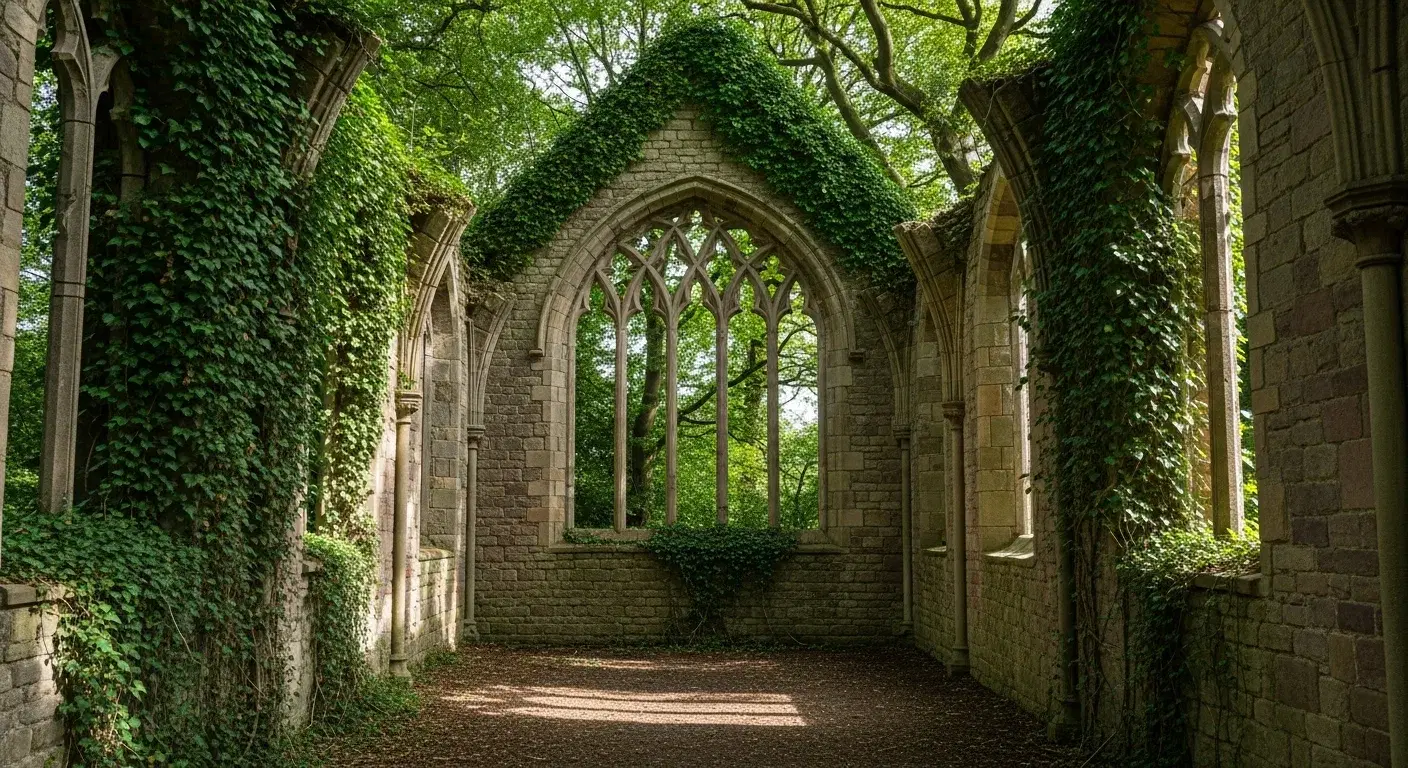
Tucked away on the west bank of Jesmond Dene, half-hidden by trees and easy to walk past without noticing, stand the ruins of the oldest religious building in Newcastle. St Mary's Chapel was built in the 12th century, drew pilgrims from across medieval England, and gave Jesmond its name. Today it's a Grade II listed ruin, roofless sandstone walls with arched windows, shaded by mature trees, visited by a handful of curious walkers and the occasional Catholic pilgrimage.
Most Jesmond residents have never been. If you're one of them, it's worth the detour.
The Origins, And How Jesmond Got Its Name
According to local tradition, sometime after the Norman Conquest an apparition of the Virgin Mary holding the infant Jesus appeared at a rocky outcrop in the Dene, what later became known as St Mary's Rock, near the waterfall. The site was declared holy, a chapel was built on the hillside above, and pilgrims began arriving.
The name "Jesmond" itself is thought to derive from "Jessemougth" or "Jesusmound", the mound where the apparition was said to have occurred. Over eight centuries, the name softened into the Jesmond we know today. The first documented reference to the chapel dates to 1272.
Best for: The neighbourhood's name literally means "Jesus Mound", named after the chapel's founding legend.
A Major Medieval Pilgrimage Site
By the late medieval period, St Mary's Chapel was no ordinary parish church. The chapel housed what was claimed to be a holy relic connected to the Virgin Mary, likely brought back from the Crusades, and its reputation for miracles drew pilgrims from across the country.
In 1479, a rector from Yorkshire described the shrine as one of the four most holy places in the kingdom, ranking it alongside Canterbury Cathedral and St Paul's Cathedral in London. A hospital was built roughly 50 metres from the chapel to house visiting pilgrims.
The pilgrimage traffic was significant enough to shape Newcastle itself. Pilgrim Street, one of the main roads through the city centre, is named after the pilgrims who lodged at inns there before making the short walk up to Jesmond. The chapel wasn't just a local curiosity; it was a destination of national religious importance.
The Architecture, What Survives
The original 12th-century chapel included a nave roughly 20 metres long, built from coarse-grained sandstone blocks. A chancel arch from this period still stands. In the 14th century the chapel was extended in two phases: first the chancel was enlarged, then a chantry chapel was added to the south side.
What survives today is primarily the chancel and chantry chapel, standing approximately 6 metres high, roofless but structurally intact enough to give a clear sense of the building's scale and proportions. Two piscinae (stone basins used for washing communion vessels) are visible in the south wall, a tangible connection to the liturgical life of the medieval chapel.
The ruin is atmospheric rather than grand, no soaring arches or elaborate carvings, but quiet, weathered stonework that's been standing on this hillside for 800 years.
Dissolution and Decline
The chapel passed through several hands over the centuries. In 1391, property rights were held by Jane Emeldon. In 1516, Sir John Mordaunt, a courtier of Henry VIII, purchased the chapel. After the Dissolution of the Monasteries, Edward VI sold the chapel to the Corporation of Newcastle.
By this point the building was already falling into disrepair. Without its pilgrimage income and with the Reformation suppressing Catholic devotion to shrines and relics, the chapel lost its purpose and its roof. It remained in the possession of Newcastle until 1883, when Lord Armstrong, who had laid out Jesmond Dene as a public park, returned the site to the city along with the rest of the Dene.
The Pilgrimage That Continues
Despite the Reformation, devotion to St Mary's Chapel never entirely died. The ruins remain a place of Catholic worship, Masses are occasionally celebrated in the open air among the walls by the local bishop or parish priest, and annual pilgrimages by Catholic groups continue.
The chapel's listing on the Northern Saints Trail connects it to the wider network of holy sites across the North East. For anyone interested in the region's religious history, it sits alongside Durham Cathedral, Lindisfarne Priory, and the Venerable Bede's monastery at Jarrow.
How to Find It
The chapel is easy to miss. There's no large sign, and it sits above the main Dene path rather than alongside it.
From the main Jesmond Dene path: walk south from the Visitor Centre / Pet's Corner area. Where the path follows the river, look for steps leading uphill to the left towards Reid Park Road. The ruins are at the top of the steps, set back from the road behind railings.
From Reid Park Road: the chapel is on the east side of the road, behind a low railing. Look for the sandstone walls through the trees.
Coordinates: 54.992629, -1.596322
The ruins are accessible at any time. There's no gate or restricted hours. The site is small (a 5-minute visit to walk around the walls) but combines well with a longer walk through the Dene. The Jesmond Dene visitor guide has full walking route details.
Why It Matters
St Mary's Chapel is a reminder that Jesmond's history stretches far beyond Victorian terraces and Osborne Road bars. Eight hundred years ago, this hillside above the Ouseburn was a destination of national religious significance, a place where pilgrims from across England came seeking miracles, and where the very name of the neighbourhood was born.
Today it's one of Newcastle's quietest, most overlooked historic sites. If you walk through Jesmond Dene regularly and have never climbed the steps to the chapel, take the detour next time. You'll have it to yourself.
Information sourced from Historic England, Historiette, Fabulous North, Northern Saints Trail, and Friends of Jesmond Dene. Visit to verify current access.
Local businesses mentioned
Never miss what’s on
Join the weekly Jesmond.live digest — the best events, news and local tips, straight to your inbox. Free, one email a week.