Jesmond's Victorian Streets: A Self-Guided Walking Tour
Bay windows, iron railings, and 150 years of architectural character, a self-guided walk through Jesmond's finest Victorian and Edwardian streets.
Jesmond's character is written in its buildings. The grand terraces, bay windows, decorative ironwork, and tree-lined avenues that define the neighbourhood today are almost entirely the product of a single era, the Victorian and Edwardian expansion of the 1870s to 1900s, when the arrival of the railway transformed Jesmond from rural farmland into Newcastle's most desirable commuter suburb.
This self-guided walking tour takes you through the finest streets and landmarks from that period. Allow 90 minutes to two hours at a comfortable pace, with plenty of stops to look up.
Start: Brandling Village
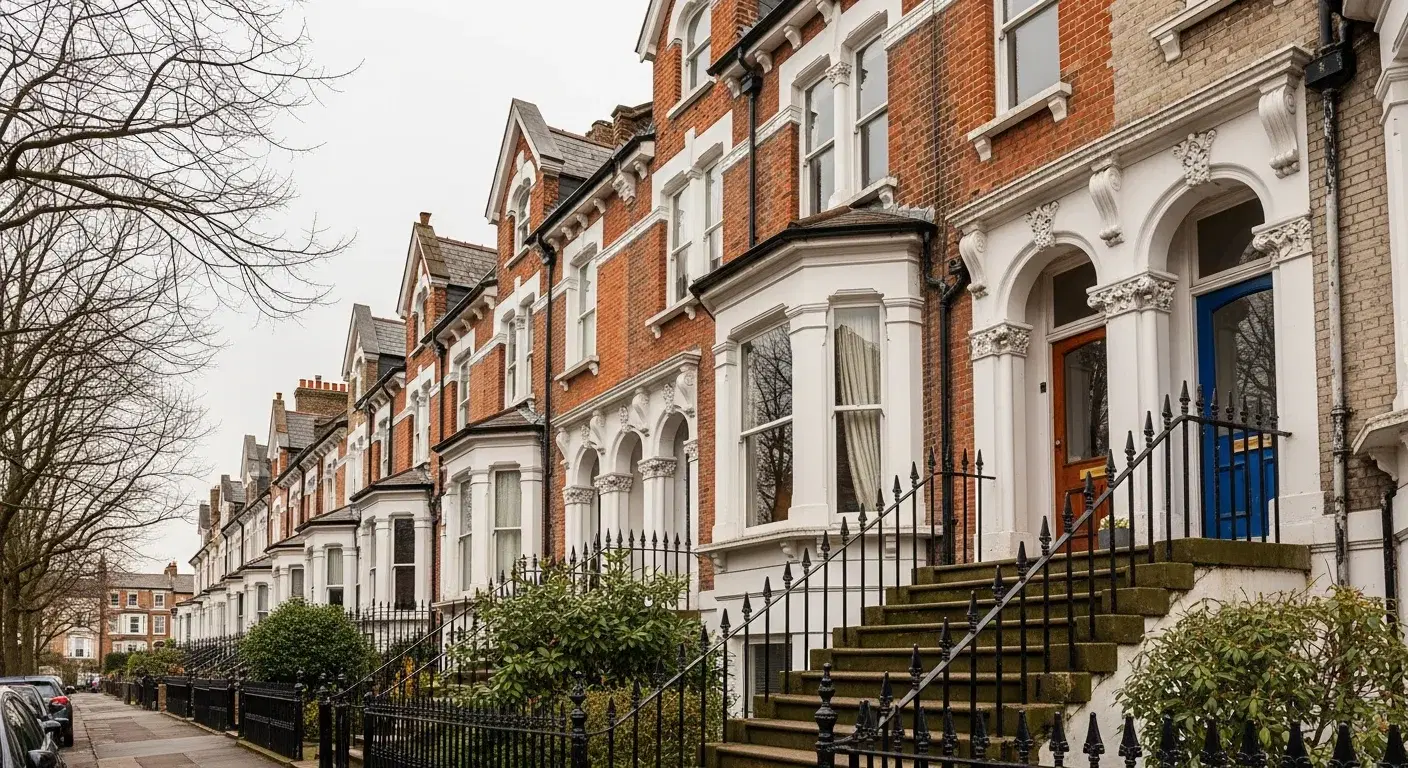
Begin at Brandling Village, the small conservation area around Brandling Park and the streets immediately south of it. This was one of the earliest parts of Jesmond to be developed, and the houses here, solid, well-proportioned Victorian terraces, set the template for what would follow across the rest of the neighbourhood.
Look for the characteristic details of the period: canted bay windows, ornamental stonework above doorways, decorative ridge tiles on the rooflines, and cast-iron railings fronting the small gardens. Many of these features survive because the area has been protected as a conservation area, limiting unsympathetic alterations.
Best for: The starting point for Jesmond's Victorian story. Notice the ironwork and the consistency of the streetscape.
Clayton Road Area
Walk north-east towards Clayton Road and the surrounding streets. This area represents the solid middle of Victorian Jesmond, streets of well-built family houses, many of them now converted into flats, but still displaying the architectural confidence of their original design.
The houses here are typically two or three storeys, in red or brown brick, with the bay windows and sash windows that are Jesmond's most recognisable architectural feature. The street widths are generous, the Victorians planned for light and air, even in terraced housing, and the mature street trees that now tower over the rooflines add a grandeur that the original builders could only have imagined.
Best for: Solid, confident Victorian housing. The generous street widths and mature trees lift these streets above the ordinary.
Brentwood Avenue and Fernwood Avenue
Continue north to the parallel streets of Brentwood Avenue and Fernwood Avenue, two of Jesmond's finest Victorian residential streets. The terraces here are grander than those in the Clayton Road area: taller, wider, and more elaborately decorated, with deep bay windows running the full height of the house and substantial front gardens behind iron railings.
These streets were built for Newcastle's prosperous professional class, merchants, lawyers, doctors, and the ambition shows in every detail. Look for the decorative terracotta panels set into the brickwork, the stained glass fanlights above front doors, and the elaborate chimney stacks that punctuate the roofline.
Brentwood Avenue in particular has retained a remarkable consistency of character, with relatively few of the replacement windows and pebble-dashed frontages that have diluted some neighbouring streets.
Best for: Jesmond's grandest terraces. The bay windows on Brentwood Avenue are some of the finest in Newcastle.
Ilford Road
A short walk east brings you to Ilford Road, another of Jesmond's premier Victorian streets. The houses here are similar in scale and ambition to Brentwood Avenue, tall, double-fronted terraces with commanding bay windows and generous proportions.
Ilford Road runs north-south and catches the light well, which shows off the brickwork and architectural detailing to good effect. On a sunny afternoon, the interplay of light and shadow across the bay windows and the cast-iron balconies is genuinely photogenic.
Best for: Grand terraces with excellent natural light. Bring a camera on a sunny afternoon.
Armstrong Bridge
From Ilford Road, walk east towards Armstrong Bridge, the dramatic iron bridge built in 1878 that spans the steep valley of Jesmond Dene. The bridge was commissioned by William Armstrong (later Lord Armstrong), the industrialist and inventor who also gifted Jesmond Dene to the city.
The bridge is a fine piece of Victorian engineering: a single-span iron structure with ornamental railings, set against the backdrop of the Dene's ancient woodland. The views from the bridge, down into the wooded valley on both sides, are among the best in Jesmond.
Armstrong Bridge is Grade II listed and is both a functional crossing and a monument to the Victorian confidence in engineering and civic improvement that shaped Jesmond.
Best for: A Victorian iron bridge over ancient woodland. The views from the centre of the span are spectacular.
Jesmond Dene Road
Cross the bridge and continue along Jesmond Dene Road, where the character shifts from terraced housing to something altogether grander. The houses here are large detached and semi-detached villas, set back from the road behind mature gardens, the homes of Jesmond's wealthiest Victorian and Edwardian residents.
The architectural styles are more varied than on the terraced streets: Arts and Crafts influences, mock-Tudor half-timbering, and the occasional nod to classical proportions. Jesmond Dene House, the boutique hotel, is the finest example, a Grade II listed Arts and Crafts mansion that now serves as one of Newcastle's best restaurants and hotels.
Best for: Where the terraces give way to mansions. Jesmond Dene House is the architectural highlight of the entire walk.
St Mary's Chapel
A short detour into Jesmond Dene itself brings you to the ruins of St Mary's Chapel, a small medieval chapel dating from the 12th century. The chapel predates Jesmond's Victorian development by seven centuries, but it was incorporated into the Victorian landscape when Armstrong laid out the Dene as a public park.
The ruins are atmospheric, a roofless stone shell surrounded by woodland, with a quiet dignity that contrasts with the confident grandeur of the Victorian streets above. It's a reminder that Jesmond's history stretches far beyond the Victorian era, even if the Victorians are responsible for most of what we see today.
Best for: A 12th-century ruin in a Victorian park. A quiet, atmospheric detour from the main walk.
Why Jesmond Looks the Way It Does
Jesmond's transformation happened within a single generation. Before the 1870s, the area was largely farmland and country estates. The opening of the railway line (and later the tramway along Osborne Road) made it possible to live in leafy Jesmond and work in central Newcastle, and the Victorian middle classes seized the opportunity.
The result is a neighbourhood with an unusual architectural consistency. The same materials (local brick, sandstone dressings, Welsh slate roofs), the same proportions (generous bay windows, tall ceilings), and the same civic confidence run through street after street. Conservation area designations now protect these streetscapes from unsympathetic development, ensuring that what the Victorians built continues to define Jesmond's character.
Have a suggestion? Get in touch.
Local businesses mentioned
Never miss what’s on
Join the weekly Jesmond.live digest — the best events, news and local tips, straight to your inbox. Free, one email a week.
What's On
Dead Calm at The Cluny
7:30 PM · The Cluny, 36 Lime Street, Ouseburn, NE1 2PQ
Sounds of the Underground: Bartholomew, the Cave
7:30 PM · Victoria Tunnel Entrance, Ouse Street, Newcastle
Francis of Delirium at Cluny 2
7:30 PM · Cluny 2, 36 Lime Street, Ouseburn, NE1 2PQ