Famous People from Jesmond
From the industrialist who gave Newcastle Jesmond Dene to the philosopher who lodged on Brandling Park, the notable people who have called Jesmond home.
Jesmond's tree-lined terraces and grand Victorian villas have attracted an unusual concentration of remarkable people over the past two centuries. As Newcastle's wealthiest suburb during the industrial age, it was home to shipbuilders, engineers, and philanthropists whose legacies still shape the city. In the 20th century it drew philosophers, poets, footballers, and, on at least one famous night, the Beatles.
Here are some of the most notable people who have lived in, grown up in, or are strongly associated with Jesmond.
Lord Armstrong (1810--1900)
William George Armstrong, 1st Baron Armstrong, was the industrialist, engineer, and inventor whose name is stamped across Newcastle. He made his fortune manufacturing hydraulic machinery and armaments, and his firm Armstrong Whitworth became one of the largest industrial enterprises in the world.
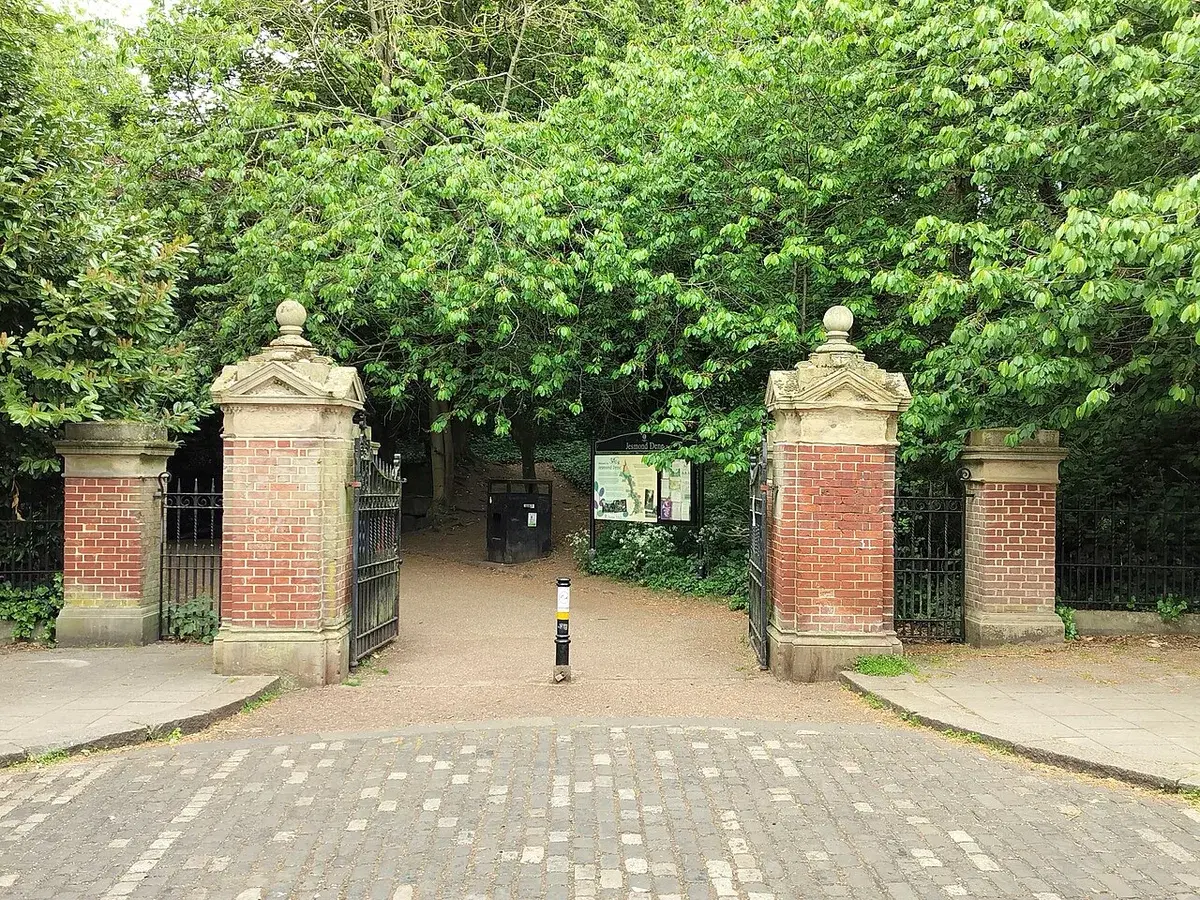
Armstrong's connection to Jesmond is profound. From the 1830s he lived in a house in what is now Jesmond Dene, and over the following decades he transformed the surrounding narrow wooded valley into a landscaped pleasure ground. In 1883, he and his wife Margaret donated the entire park, along with a Banqueting Hall, to the people of Newcastle. It remains one of the finest urban parks in England, and Armstrong Bridge, which spans the Dene, still bears his name.
Best for: The man who gave Newcastle Jesmond Dene. Armstrong lived in the valley from the 1830s and donated it as a public park in 1883.
Charles Mitchell (1820--1895)
Charles Mitchell was a Scottish-born shipbuilder who founded major yards on the Tyne and helped build some of the largest vessels of the Victorian age. His Low Walker yard, established in 1852, later merged with Armstrong's works to form Armstrong Mitchell & Co in 1882.
Mitchell purchased the Jesmond Towers estate in 1869, making it his family home. He was a generous benefactor to the neighbourhood: he donated the land and 30,000 pounds for the construction of St George's Church on Osborne Road, which was consecrated in 1888 and is now Grade I listed. Its 154-foot bell tower, inspired by St Mark's in Venice, is one of Jesmond's most recognisable landmarks.
Best for: Shipbuilder, industrialist, and the man who funded St George's Church, Jesmond's most distinctive building.
Sir Arthur Sutherland, 1st Baronet (1867--1953)
Sir Arthur Munro Sutherland was a shipowner, philanthropist, and public servant who served as Lord Mayor of Newcastle during the First World War. He was appointed KBE in 1920 for his wartime civic service, and created a baronet in 1921.
Sutherland's Jesmond home was Thurso House on Fernwood Road, a grand Victorian property that he bequeathed to the city upon his death in 1953. It became the Mansion House, the official residence of the Lord Mayor of Newcastle, a role it still serves today. The house is one of the most impressive residential buildings in the neighbourhood.
Best for: The shipowner whose Jesmond town house became the Lord Mayor's official residence, and still is.
John Hancock (1808--1890)
John Hancock was a Newcastle-born naturalist, ornithologist, and taxidermist who is widely credited as the father of modern taxidermy. His dramatic, lifelike mounted specimens, including a celebrated falcon attacking a heron, shown at the 1851 Great Exhibition, revolutionised the craft.
Hancock lived on St Mary Terrace in Jesmond and was instrumental in raising funds for the museum that now bears the family name: the Great North Museum: Hancock on Barras Bridge. He and his brother Albany (a distinguished marine biologist who collaborated with Darwin) are both buried in Jesmond Old Cemetery.
Best for: The father of modern taxidermy, a Jesmond resident, and the man behind the museum that bears his name.
Basil Bunting (1900--1985)
Basil Bunting is regarded as one of the most important British modernist poets of the 20th century. His masterwork Briggflatts (1966) is considered one of the finest long poems in the English language, and he was championed by Ezra Pound and admired by Allen Ginsberg.
Bunting's parents moved to Jesmond, where he grew up. After decades abroad, including spells in Persia, Italy, and the United States, he returned to Newcastle, working as a sub-editor on the Evening Chronicle before being rediscovered by a younger generation of poets in the 1960s. In 1965, Ginsberg visited Bunting at a flat in Jesmond, cementing the neighbourhood's unlikely place in the history of American Beat poetry.
Best for: Modernist poet, Ezra Pound protege, and Jesmond-raised, rediscovered by Allen Ginsberg in the 1960s.
Ludwig Wittgenstein (1889--1951)
One of the most influential philosophers of the 20th century, Ludwig Wittgenstein spent ten months living in Jesmond during the Second World War. From April 1943 to February 1944, he worked as a laboratory technician at the Royal Victoria Infirmary, assisting research into wound shock.
During this period he lodged at 28 Brandling Park, a residential street on the southern edge of Jesmond. A commemorative plaque on the building marks his stay. It is a striking thought: the author of the Tractatus Logico-Philosophicus, one of the defining works of modern philosophy, spent nearly a year in a Jesmond boarding house, making tea for surgeons and cataloguing wound data.
Best for: The philosopher behind the Tractatus lived at 28 Brandling Park in 1943--44. A plaque marks the house.
Freddy Shepherd (1941--2017)
Freddy Shepherd was the businessman who served as chairman of Newcastle United from 1997 to 2007, a period that included Champions League football, the signings of Alan Shearer and Michael Owen, and the expansion of St James' Park to over 52,000 seats.
Shepherd was a Jesmond resident for much of his adult life. He died at his home in the neighbourhood on 25 September 2017, and his funeral was held at St George's Church on Osborne Road, with more than 500 mourners in attendance, including Sir John Hall, former players, and fans who gathered outside.
Best for: Newcastle United chairman from 1997 to 2007, and a Jesmond resident who lived and died in the neighbourhood.
Carly Telford (born 1987)
Carly Telford is one of the most accomplished women's footballers to come from the North East. Born in Jesmond, she went on to become a long-serving England international goalkeeper, earning over 20 senior caps. She played for Sunderland, Leeds United, Notts County, and Chelsea, and was part of the squad during a transformative era for the women's game in England.
Telford retired from professional football in March 2023.
Best for: England women's international goalkeeper, born in Jesmond and one of the North East's finest footballers.
The Beatles and "She Loves You" (1963)
Though not residents, The Beatles have a famous connection to Jesmond. On 26 June 1963, after a concert at the Majestic Ballroom in Newcastle, John Lennon and Paul McCartney began writing "She Loves You", the song that would become the best-selling single of the 1960s in the UK.
The exact hotel is disputed. Local tradition holds that they stayed at the Imperial Hotel in Jesmond, and the Newcastle Journal reported this in 1992. However, when plans for a commemorative plaque were drawn up in 2003, neither Paul McCartney nor Ringo Starr could confirm whether it was the Imperial or the Royal Turk's Head in the city centre. Jesmond claims the honour regardless.
Best for: Lennon and McCartney started writing "She Loves You" after a Newcastle gig in June 1963, possibly at a Jesmond hotel.
A Neighbourhood That Attracted Ambition
Jesmond's roll call of notable residents is not a coincidence. The neighbourhood was built during Newcastle's industrial golden age, and its grand terraces and villas were designed to house the city's most successful people. Shipbuilders, engineers, and factory owners chose Jesmond for its leafy streets, clean air, and proximity to both the city centre and the open countryside of the Town Moor.
That tradition of attracting ambitious, interesting people has never entirely faded. From Victorian industrialists to 20th-century philosophers and 21st-century athletes, Jesmond has always punched above its weight.
Know someone famous from Jesmond we've missed? Get in touch.
Never miss what’s on
Join the weekly Jesmond.live digest — the best events, news and local tips, straight to your inbox. Free, one email a week.
What's On
Thursday Talk: Finding Sanctuary Part 2 with Juno Quaintrell
6:00 PM - 7:00 PM · Jesmond Library, St George's Terrace, Newcastle upon Tyne, NE2 2DL
Music Video Preservation Society: The Art Behind the Song
7:45 PM · Tyneside Cinema, 10 Pilgrim Street, Newcastle upon Tyne, NE1 6QG
Jesmond Food Market
10:00 AM - 3:00 PM · Armstrong Bridge, 2 Benton Bank, Jesmond, Newcastle upon Tyne, NE7 7BQ